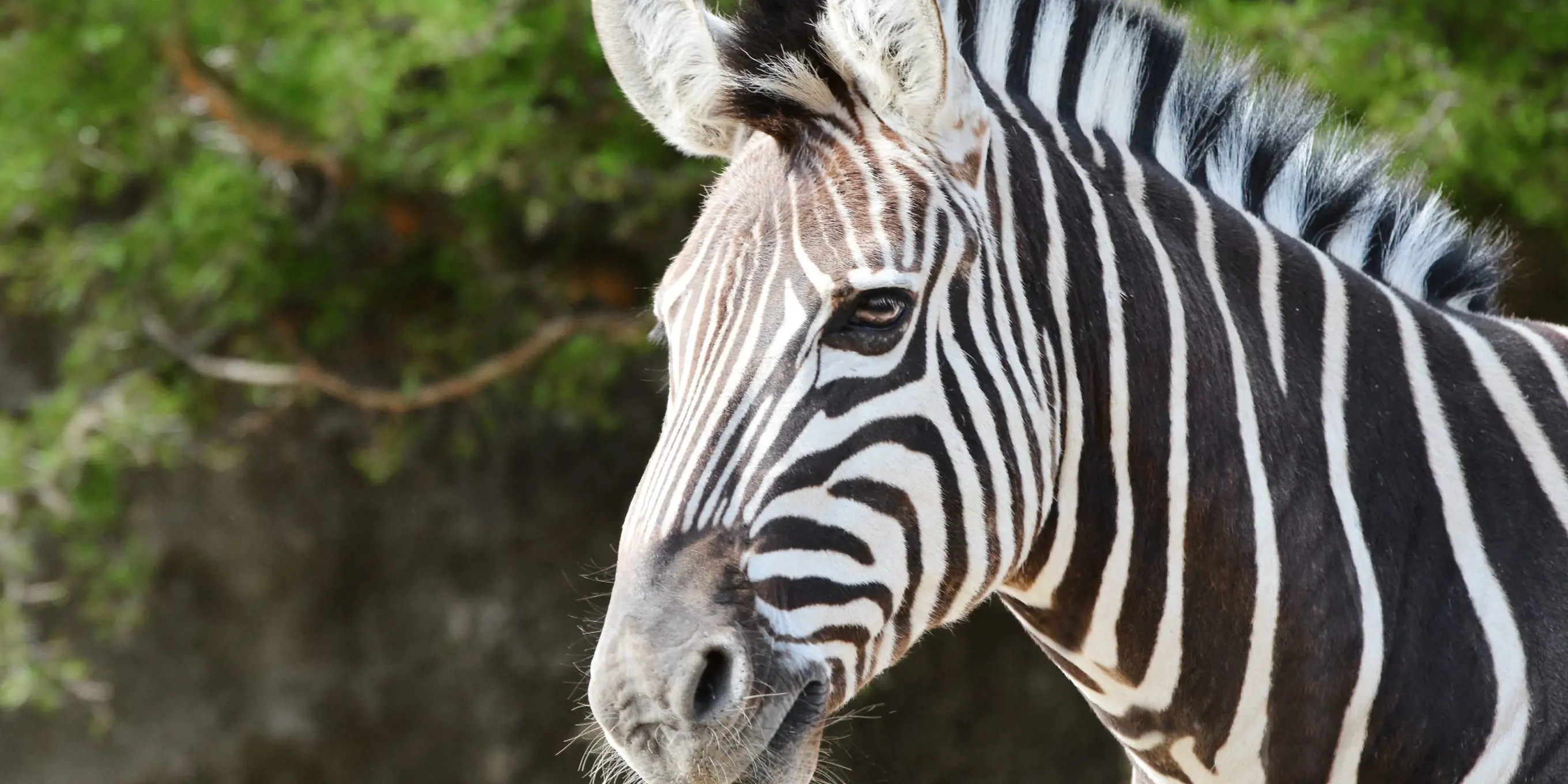
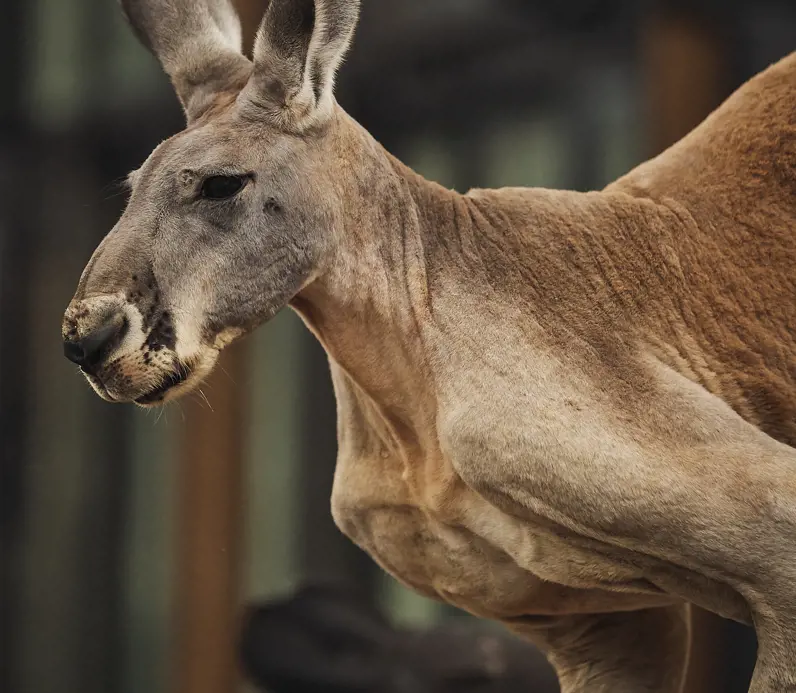
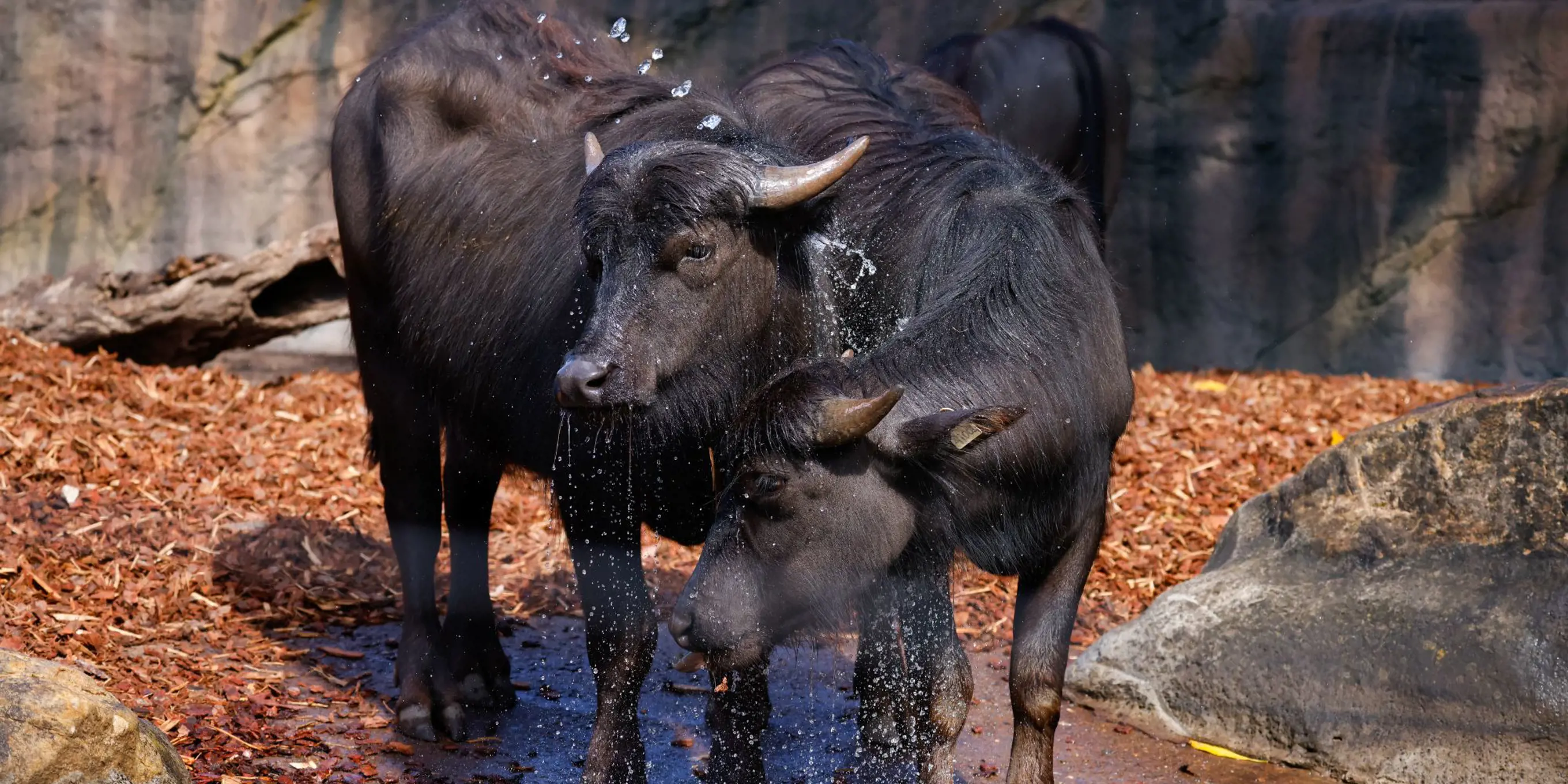
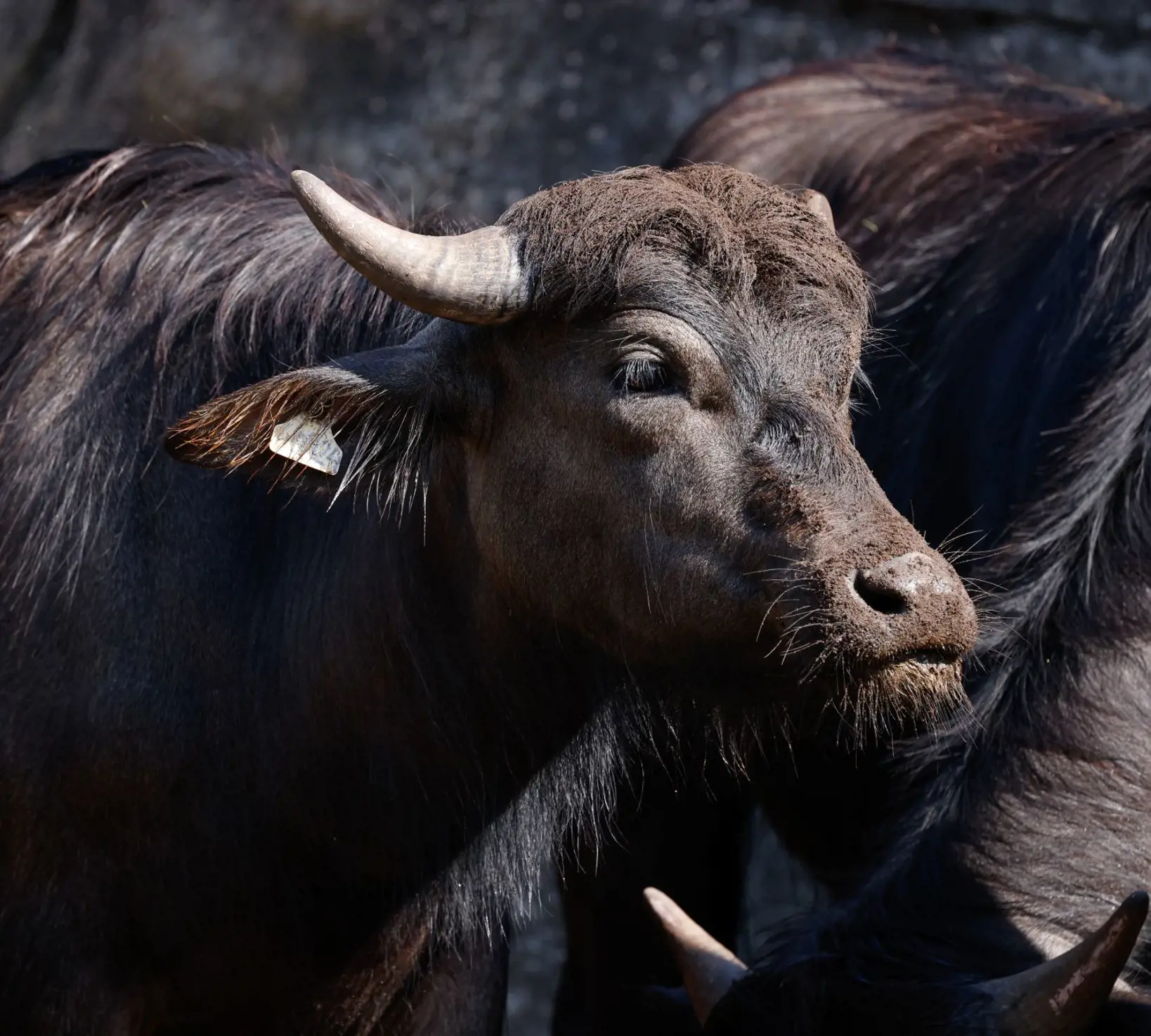
Asian Water Buffalo
Scientific nameBubalus bubalis
Conservation status (IUCN)
Unlisted
The Asian Water Buffalo is native to the wetlands of South and Southeast Asia. This cattle species has been domesticated for their meat, milk, leather, and as ‘living tractors’ for thousands of years. Asian Water Buffalos have been introduced to countries all around the world, including Australia’s north end.
Visitor tips for Sydney
You can see Asian Water Buffalo in Rhino Reserve or down the escalator near the Book Nook.
Fun facts about Asian Water Buffalo

40
Habitat:

1200kg
Distribution:

Diet:

2.9m
Mating
Gestation:
1-2
40
Habitat:
1200kg
Distribution:
Diet:
2.9m
Mating
Gestation:
1-2
Conservation status (IUCN)
Unlisted
Drying Wetlands
Wild Water Buffalo (Bubalus arnee) are listed as Endangered, with populations surviving only in a few pockets within their historic range. Breeding with domestic water buffalo, disease, hunting and habitat loss are the key threats to these wild bovines. Wetland ecosystems globally are under intense threat from agriculture and climate change, impacting species like water buffalo that rely upon them.
Buffalo deep dive
Discover more about what makes these buffalo so cool!
Water buffalo spend much of their day in the water, helping them beat the heat of their humid home range. Their wide-splayed hoofed feet prevent them from sinking too deeply in the mud and allow them to move about in wetlands and swamps. These herd animals rarely stray far from a river or lake which they will wallow in as they graze on aquatic grasses.
Water buffalo have been domesticated for over 5000 years, providing milk, meat and leather for people. They are also used as working animals to plow fields and transport people and goods. Buffalo milk is prized for its high butterfat and is used for many famous cheeses, including Italian mozzarella and burrata.
Feral populations of water buffalo have been released in many areas around the world including Northern Australia. They were introduced to Australia’s top end in the 19th century as working animals but were later released and are now a harmful pest in the region.
This population has become so large that Australia now has the largest population of the species in the world. Australia’s 200,000 feral buffalo can cause significant harm to ecosystems by eroding soil, trampling plants, disturbing waterbird nests, and spreading weeds.