Central American Eyelash Viper
Scientific nameBothriechis nigroadspersus
Conservation status (IUCN)
Least Concern
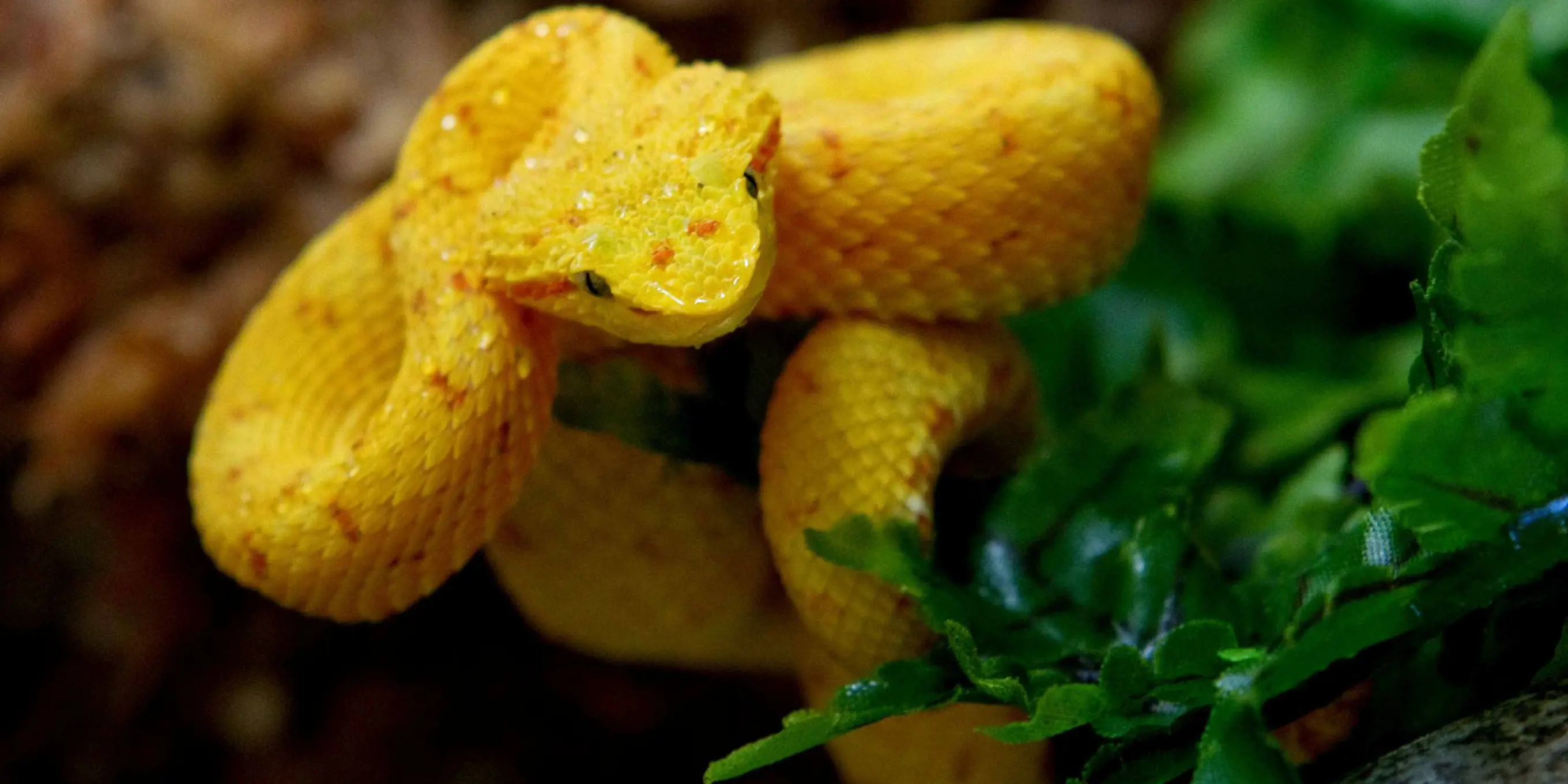
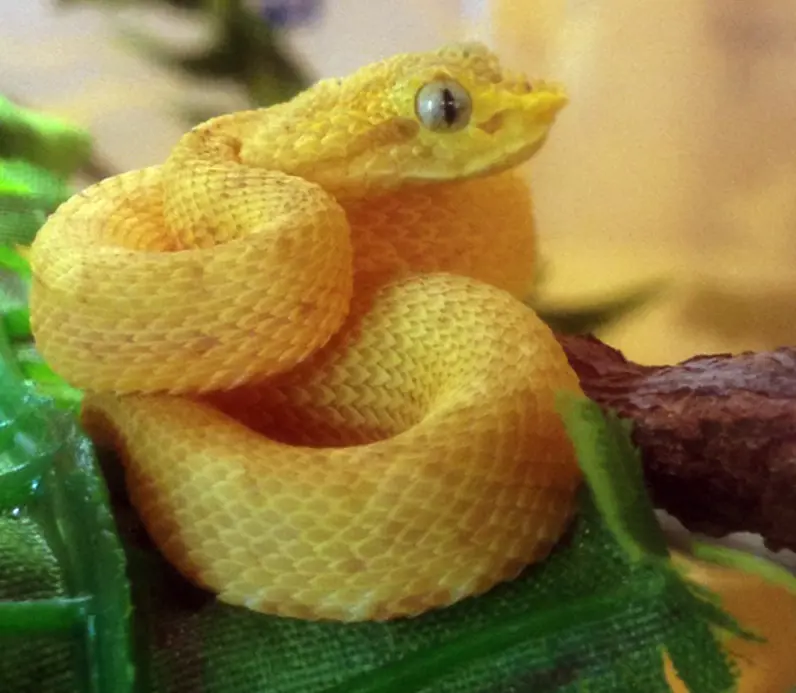
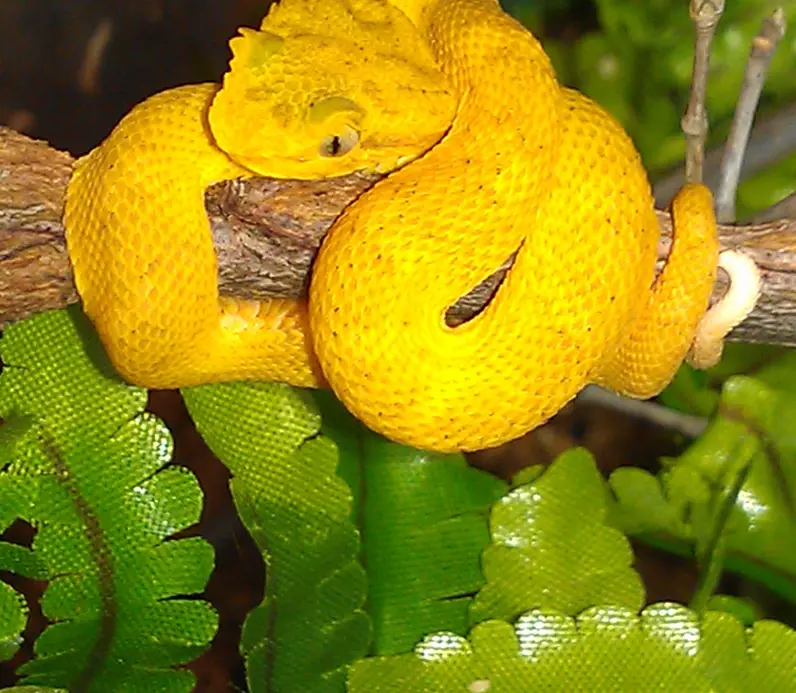
The Central American Eyelash Viper is a bright yellow snake named for the small, bristly, keeled scales just above each eye.
Visitor tips for Sydney
You can see a Central American Eyelash Viper in ARC.
Fun facts about Central American Eyelash Vipers
We bet you didn't know these facts about these Eyelash Vipers.

Scroll and tap the icons
to reveal info on the Central American Eyelash Viper.
Why the long eyelashes?
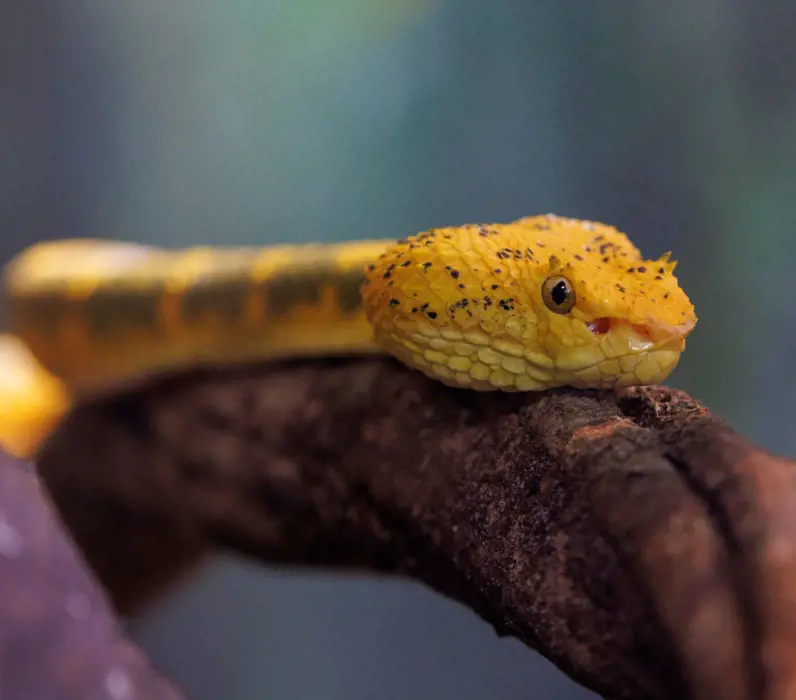
The function of their "eyelashes" or horn-like, modified scales is not fully understood, but it is thought that they protect the eyes as the snake moves through dense vegetation.
Absolutley bananas
Because of their relatively small size and ability to become camouflaged among bright yellow fruit, yellow Central American Eyelash Vipers have been accidentally shipped throughout the world in boxes of bananas.
Toxic Viper
Central American Eyelash Vipers are nocturnal predators. They paralyse their prey by injecting haemotoxic venom (toxins capable of destroying red blood cells).
Did you know?
Where they're found

20yrs

82cm
What they eat

225g
Their habitat
Where they're found
20yrs
82cm
What they eat
225g
Their habitat
Central American Eyelash Viper deep dive
Discover more about what makes these vipers so unique!
In 2024 a significant discovery revealed that there was not one species of eyelash viper but in fact five species of these spectacularly coloured snakes. New species are always a big deal, and doubly so when the animals in question come in all the colours of the rainbow. The discovery of five genetically distinct species of eyelash vipers and their undescribed diversity is an important example illustrating just how much of the planet’s biodiversity remains to be discovered.
Sense of smell is an important aspect of mate selection in vipers. When courting females, males compete in a ritual called “the dance of the adders.” They face each other with the front of their bodies erect and attempt to knock each other down. No biting occurs. The ritual can go on for hours before one male is victorious.
Female eyelash vipers incubate eggs internally for an approximately six-month gestation period and often stop feeding in the final stages of pregnancy. Eyelash pit vipers are ovoviviparous, meaning that after gestation, the young hatch out of their egg membrane inside the mother’s body or immediately after birth of the egg. These vipers typically bear 2 to 20 live young per brood.
Variation of ones’ scales matter when your markings, coloration, shapes, and fake lashes help you to survive in the wild being difficult to see or otherwise detect. Camouflaged in its natural environment, up high, is a huge asset when these slow-moving pit vipers rely on ambushing their prey.
Central American Eyelash Vipers are nocturnal predators, although they also capture moving prey from the safety of their daytime [diurnal] perch. After capture, they paralyse their prey by injecting haemotoxic venom (toxins capable of destroying red blood cells). This venom affects both the central nervous system and the cardiovascular system, making it highly toxic.